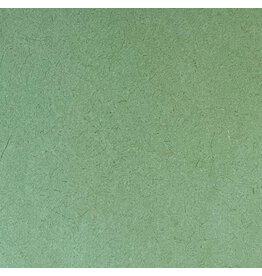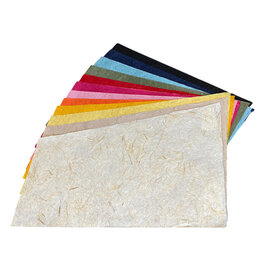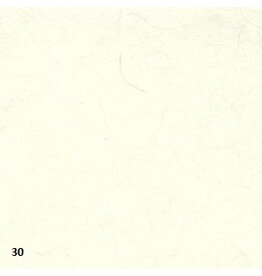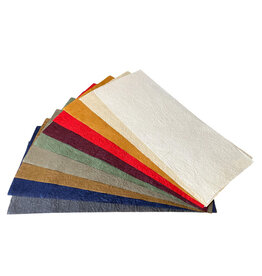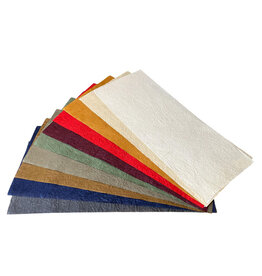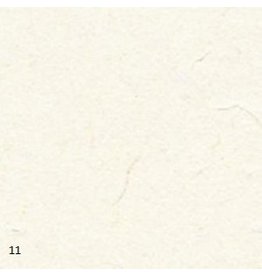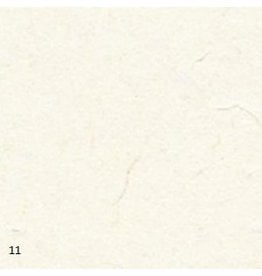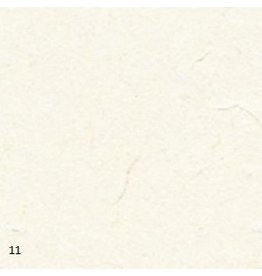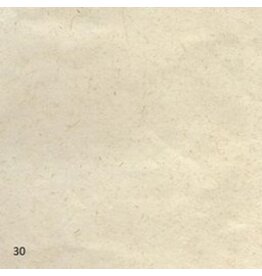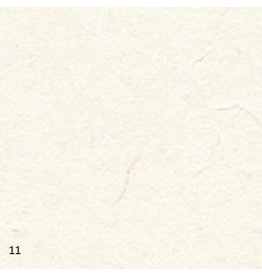
Gampi paper originates in the Philippines, where the Abacá tree grows, which closely resembles the banana tree in appearance. The fibres of this tree have been valued for centuries for their exceptional strength and natural lustre. Other natural fibres are added to these long fibres, including cogon grass — a type of grass that was long considered a weed, but has proven to be extremely suitable for paper production.
The peeled bark is boiled in large vats and finely processed into paper pulp, which is mixed with water and then spread evenly by hand over large scoop frames. During this process, natural elements such as petals or dried leaves can be added. The sheets are then dried in the sun, giving each sheet a unique character. Many small workshops in the Philippines work according to this traditional method; the paper is an important source of employment there. The workshop we work with is WFTO-certified, which stands for fair trade and sustainable production.